OBSERVE
Records sessions, recovery, sensations and performance. If you use a force sensor, it also adds objective data.
A training system that observes how you respond, learns from your progress and adapts the path toward your goal.
NEXO starts from a simple idea: a plan is a hypothesis, not a sentence. Training proposes a stimulus; your response helps decide what should happen next.
Records sessions, recovery, sensations and performance. If you use a force sensor, it also adds objective data.
NEXO compares what you do with your own history. It does not judge isolated data; it looks for trends and context.
Every session has a purpose within the cycle: strength, power, endurance, continuity, technique or recovery.
The system checks whether you complete the planned load and whether improvement appears in training and on rock.
With new information, it maintains, increases, reduces or reorganises work without losing sight of the main goal.
Completed sessions, difficulty, volume, recovery, sensations, results and rock activity allow the plan to adapt even without Tindeq or another sensor.
A dynamometer adds strength and fatigue measurements that can refine some decisions. It is an extra layer of precision, never a requirement for training with NEXO.
NEXO shows what is planned today, guides you through the session and records what happens. It then connects training, recovery, strength and climbing so the plan has context.
App screenshots currently show the Spanish beta interface. English app screenshots will replace them when the app localisation is completed.
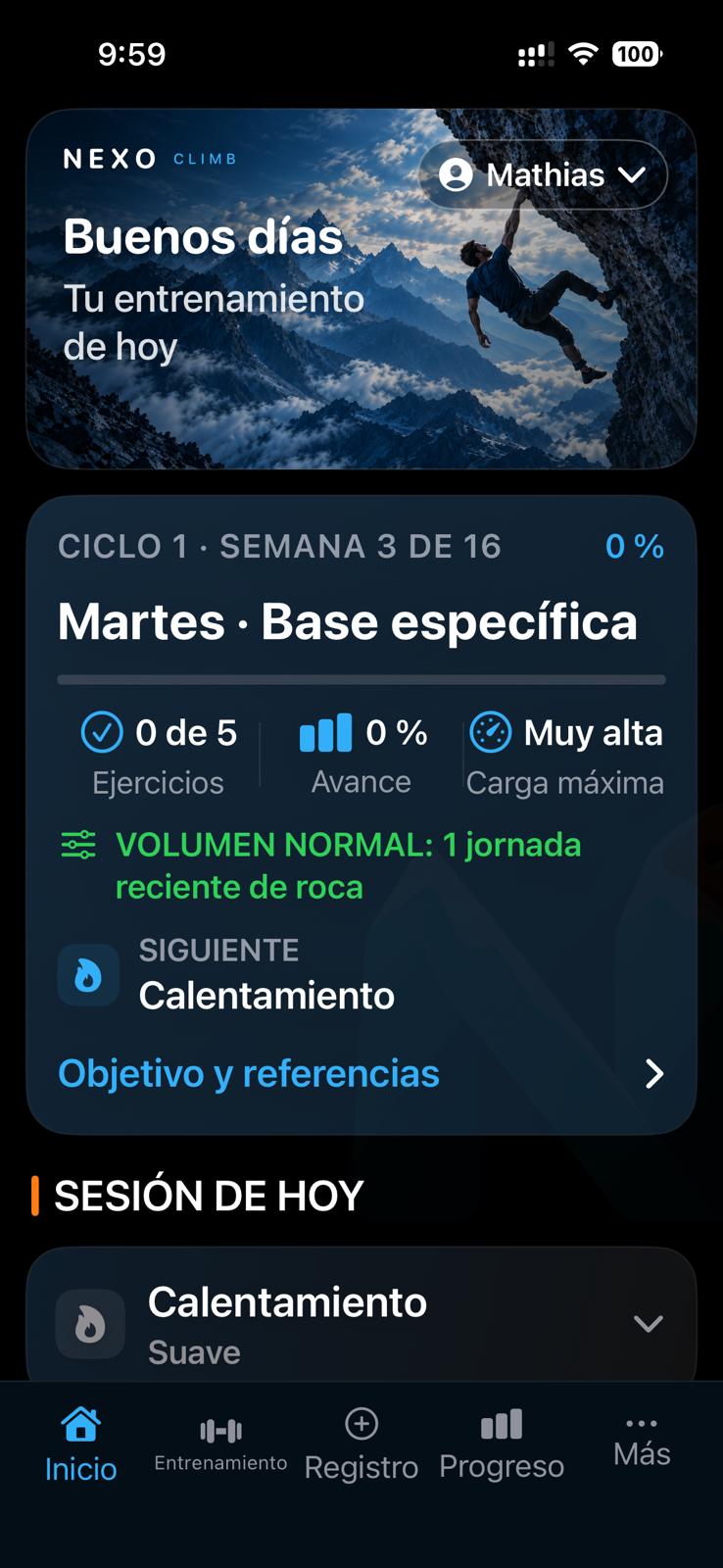
The home screen summarises the cycle, week, planned load and next exercise. If you climbed recently, NEXO includes that in the session context.
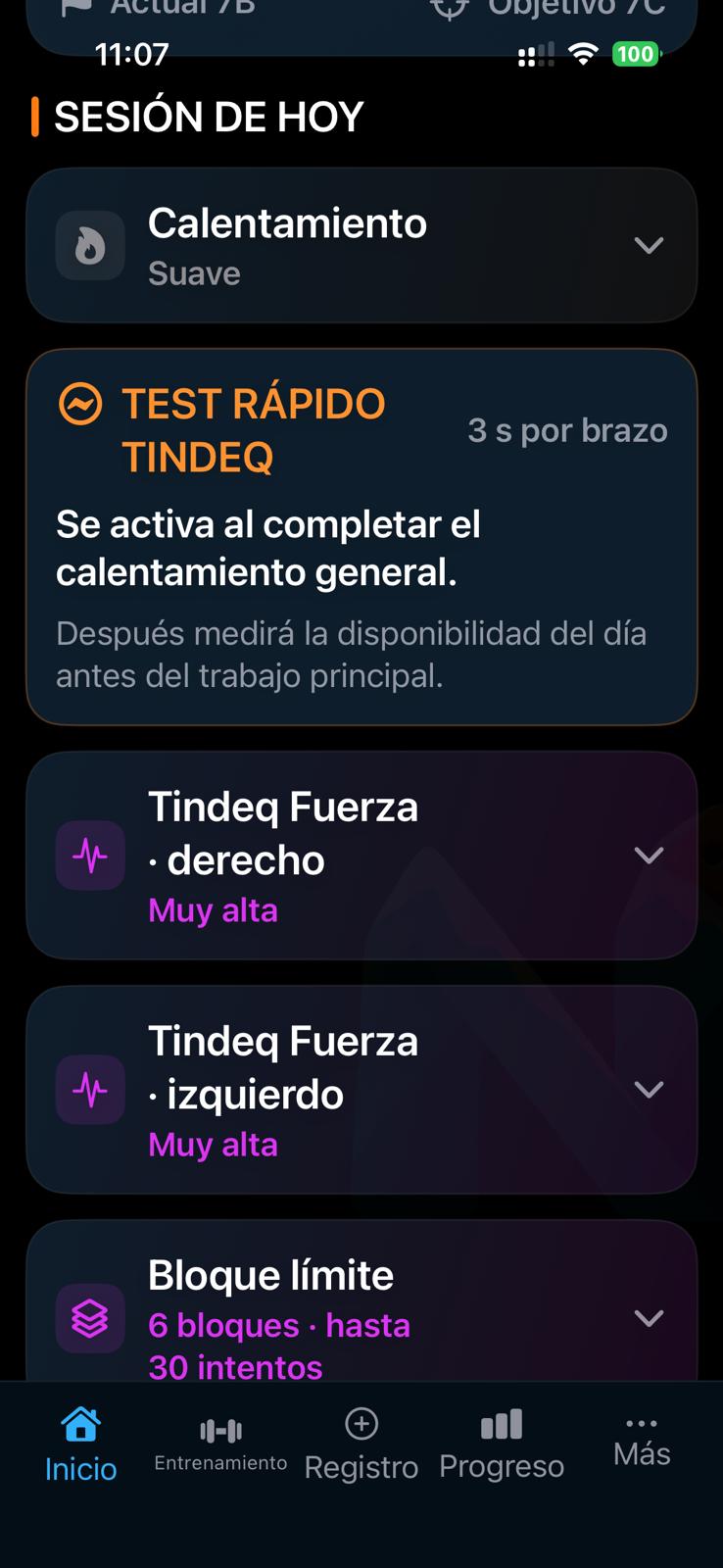
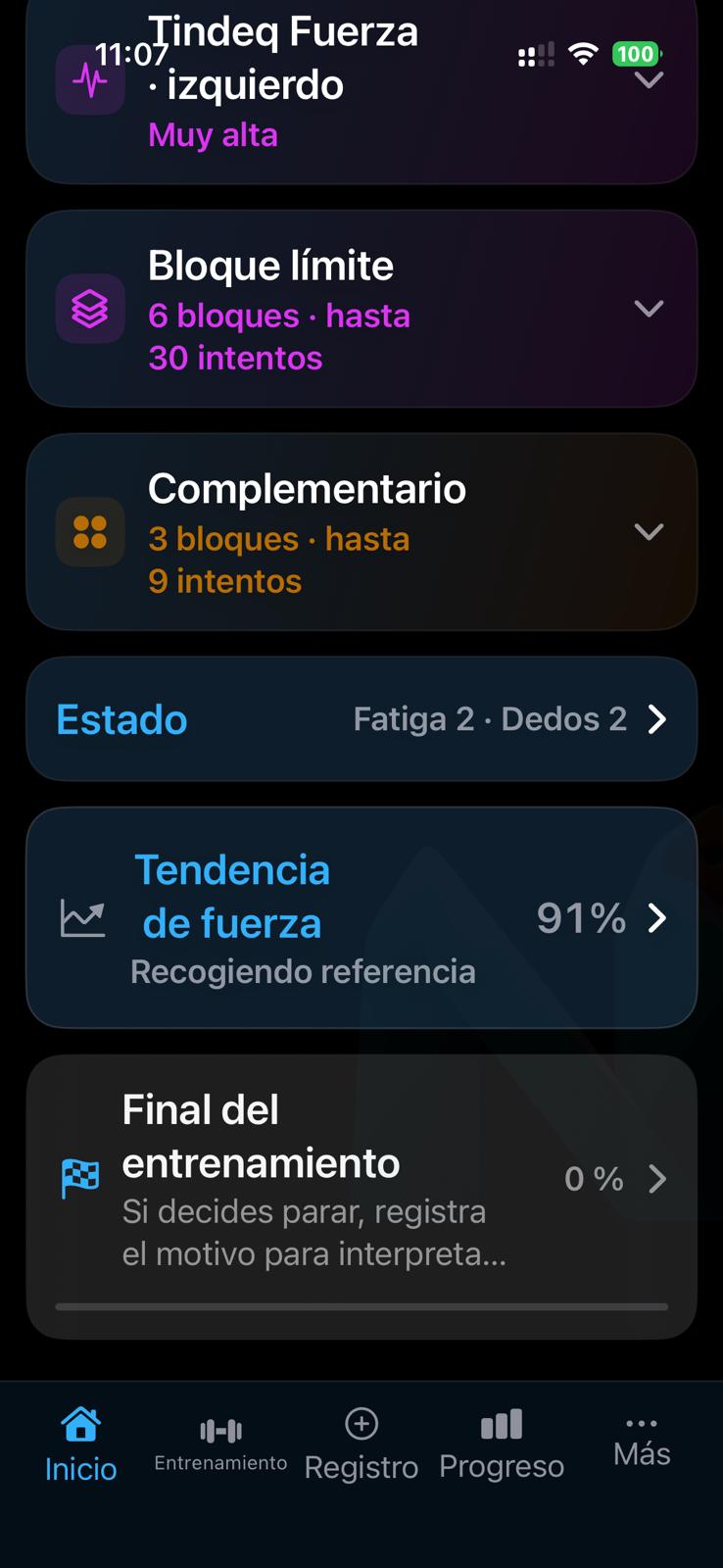
NEXO structures the warm-up, activates planned checks, shows the main work and records blocks, attempts and complementary exercises. At the end it keeps the session status and trend so it can interpret what happened, not simply tick exercises as completed.
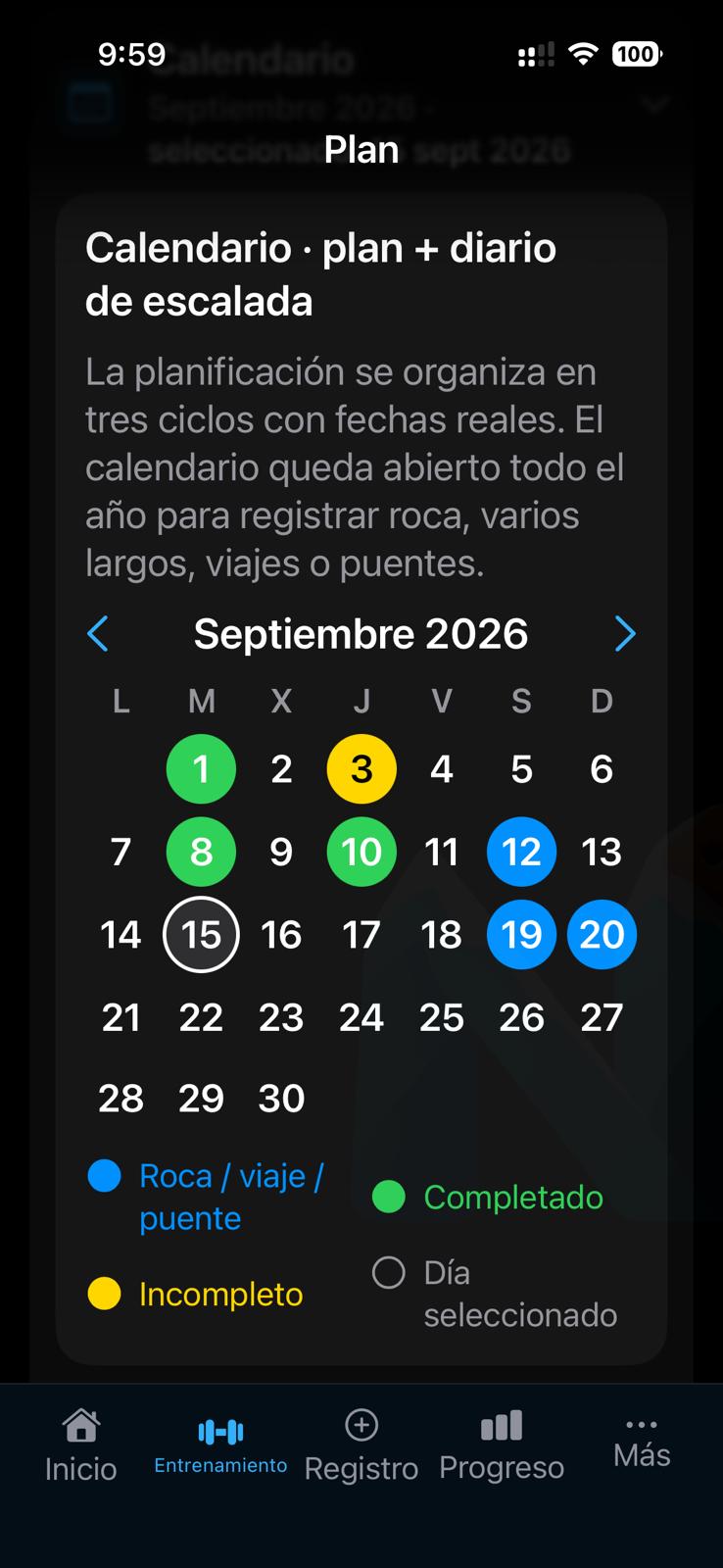
Completed training, incomplete sessions, rock days, trips and rest all live in the same plan. NEXO can reorganise upcoming loads when the week changes.
NEXO combines training information and, when available, strength measurements. The value comes from connecting them: what you did, how you arrived, how you responded and what happened afterwards.
Compliance, volume, intensity, exercises and load progression.
Sensations and context to distinguish a bad day from a trend.
MVC, Critical Force and quick tests when you use a compatible sensor.
Routes, attempts, climbing days and performance to compare training with real climbing.
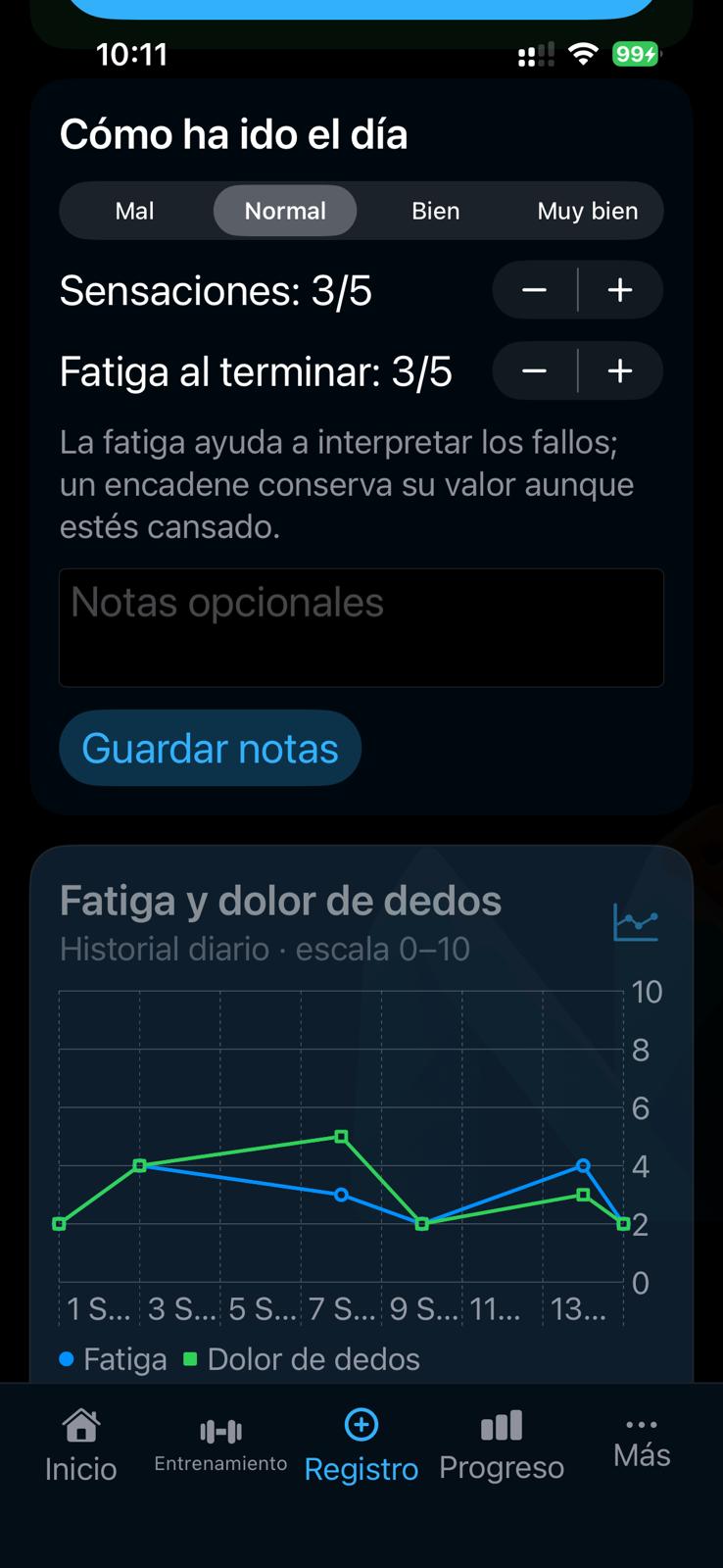
Fatigue, finger pain and daily sensations build a history. One isolated signal does not force a change, but a repeated trend may justify reducing load, moving a session or prioritising recovery.
It looks for consistent changes rather than reacting automatically to every number. If recovery is good and performance improves, it can maintain or increase the stimulus. If several fatigue signals appear, it can reduce volume or intensity. If one capacity improves but rock performance does not, the system should reassess the real limitation.
NEXO can work without Tindeq. If you use a compatible dynamometer, tests add another layer of information to compare your available strength with your own references.
Quick test. A brief check before selected sessions helps estimate your available strength that day.
MVC and Critical Force. Full tests track maximum strength, finger endurance and differences between arms.
Relative strength. NEXO relates results to bodyweight and your own progression instead of interpreting absolute kilograms alone.
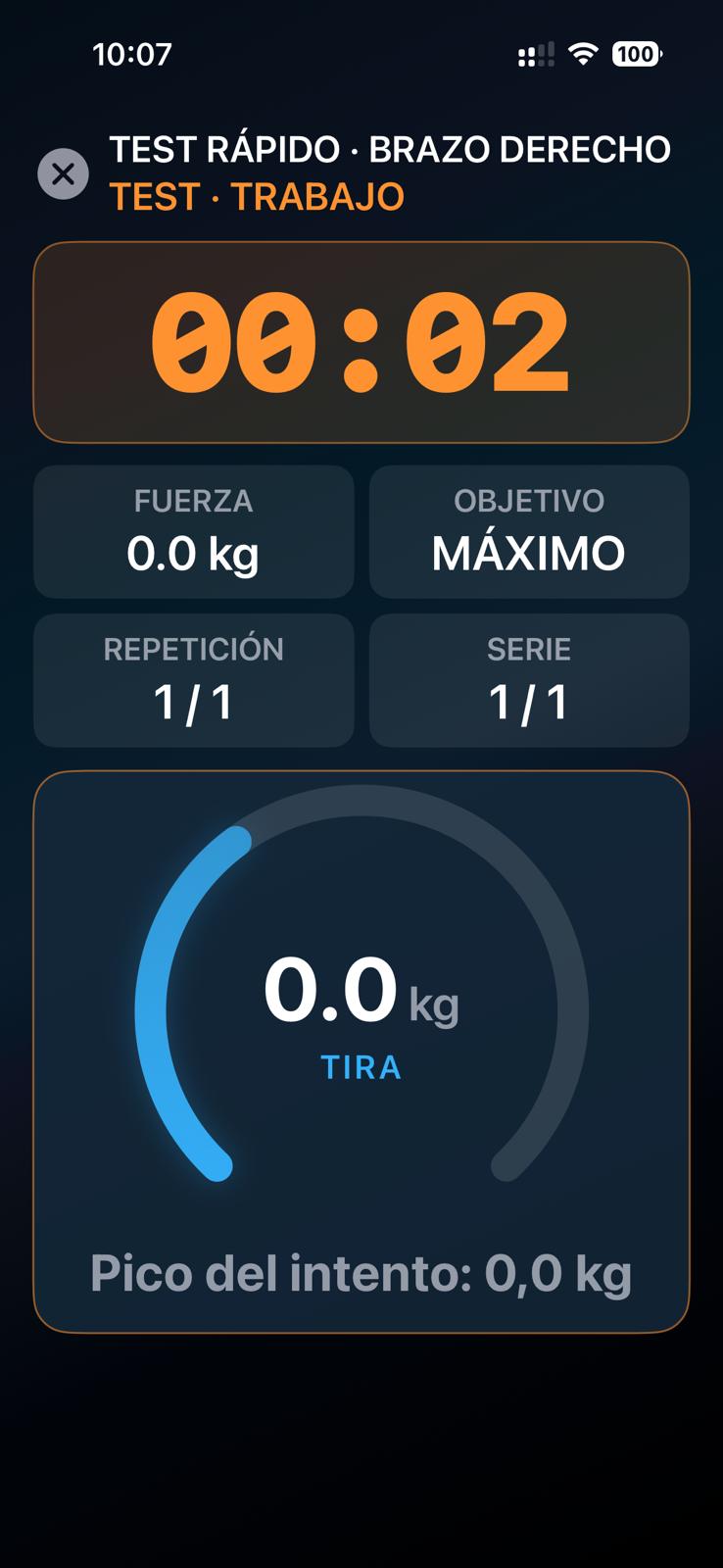
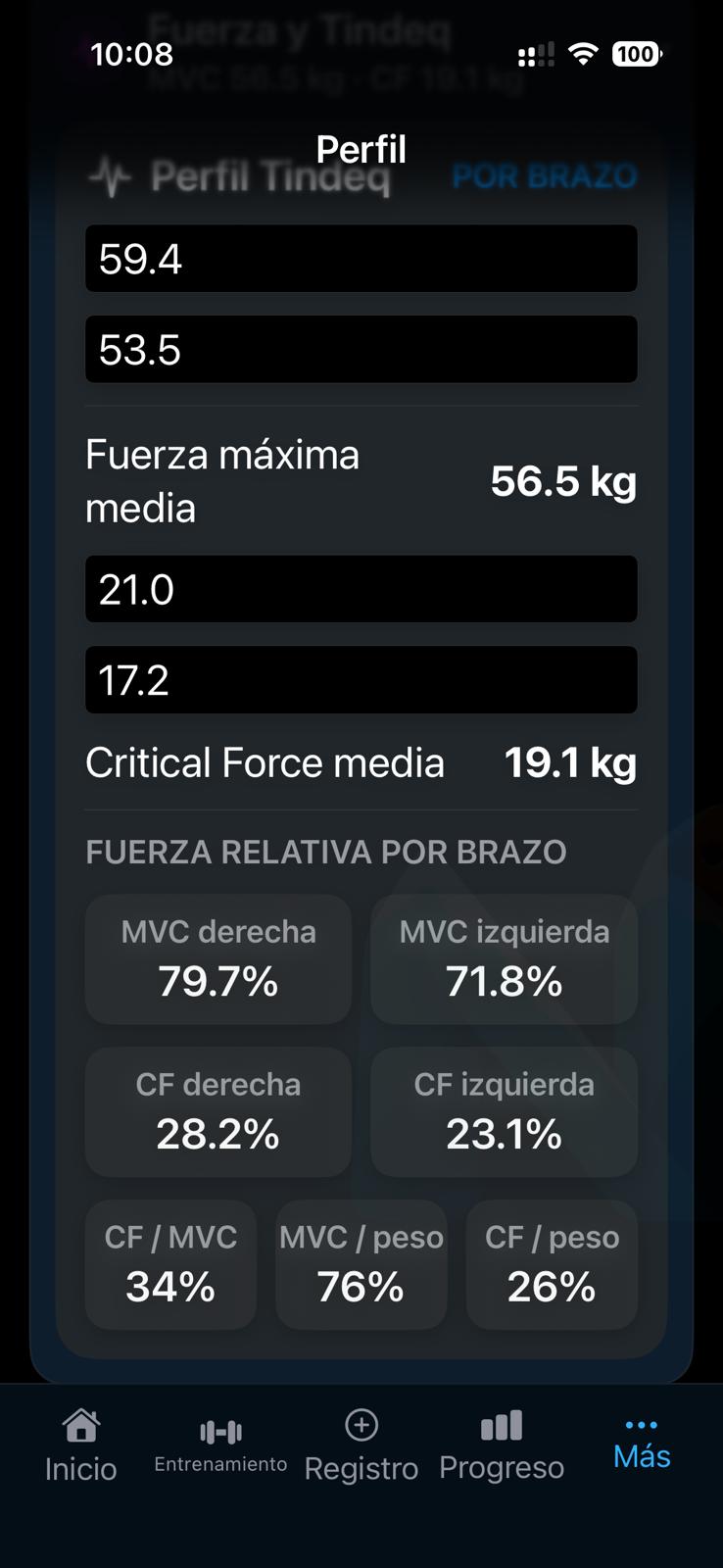
*Strength readiness is available when compatible measurement exists.
NEXO creates a direction based on your level, availability, goal and capacities to improve. It then reviews that direction as real information accumulates.
It does not change for the sake of change. One isolated session should not destroy a plan. NEXO looks for enough evidence before modifying it.
It reorganises the week. If rock climbing, fatigue or an incomplete session appears, it can reposition stimuli and rest to avoid poorly timed loads.
It adjusts the dose. Volume, intensity, number of attempts or type of work can evolve according to your response.
It keeps the goal in sight. Adapting does not mean improvising: changes still serve the purpose of the cycle.
NEXO also records what happens outside training: climbing days, routes, attempts, sends and areas. That evidence helps check whether trained capacities are becoming climbing performance.
Choose rock or gym, discipline, area and sector. Location can come from the iPhone, a Google Maps link or manual entry.
Then record routes and results. With enough history, NEXO can distinguish consolidated level, demonstrated maximum, projects and future goals.
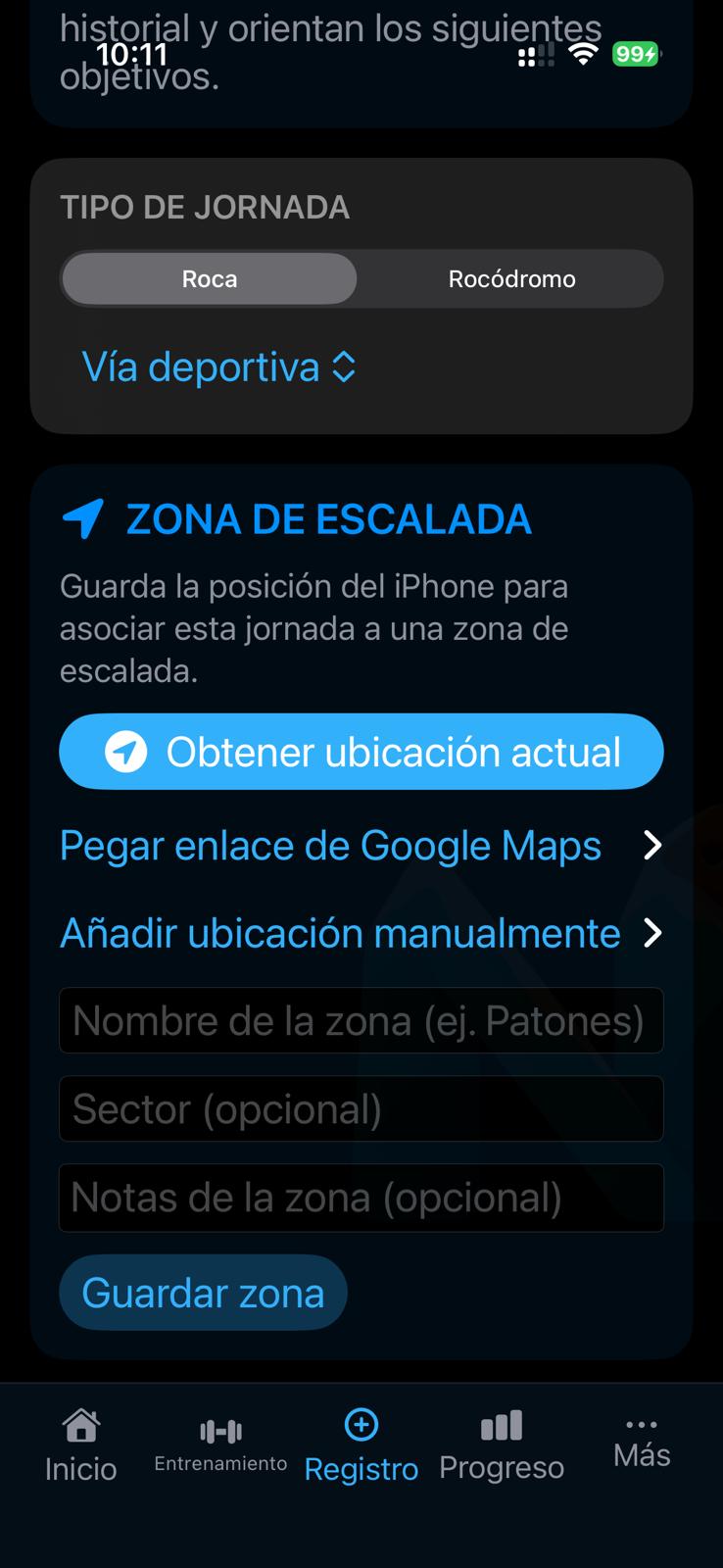
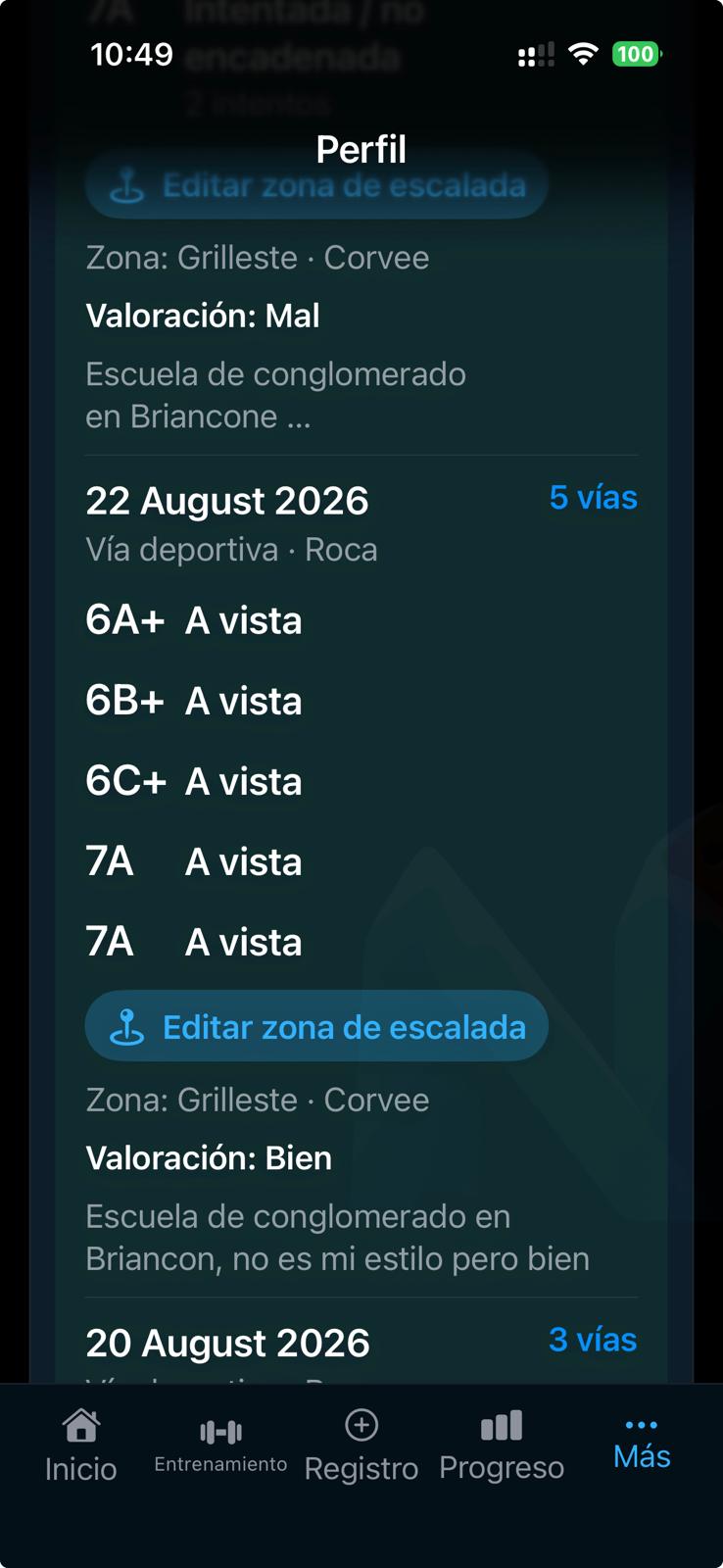
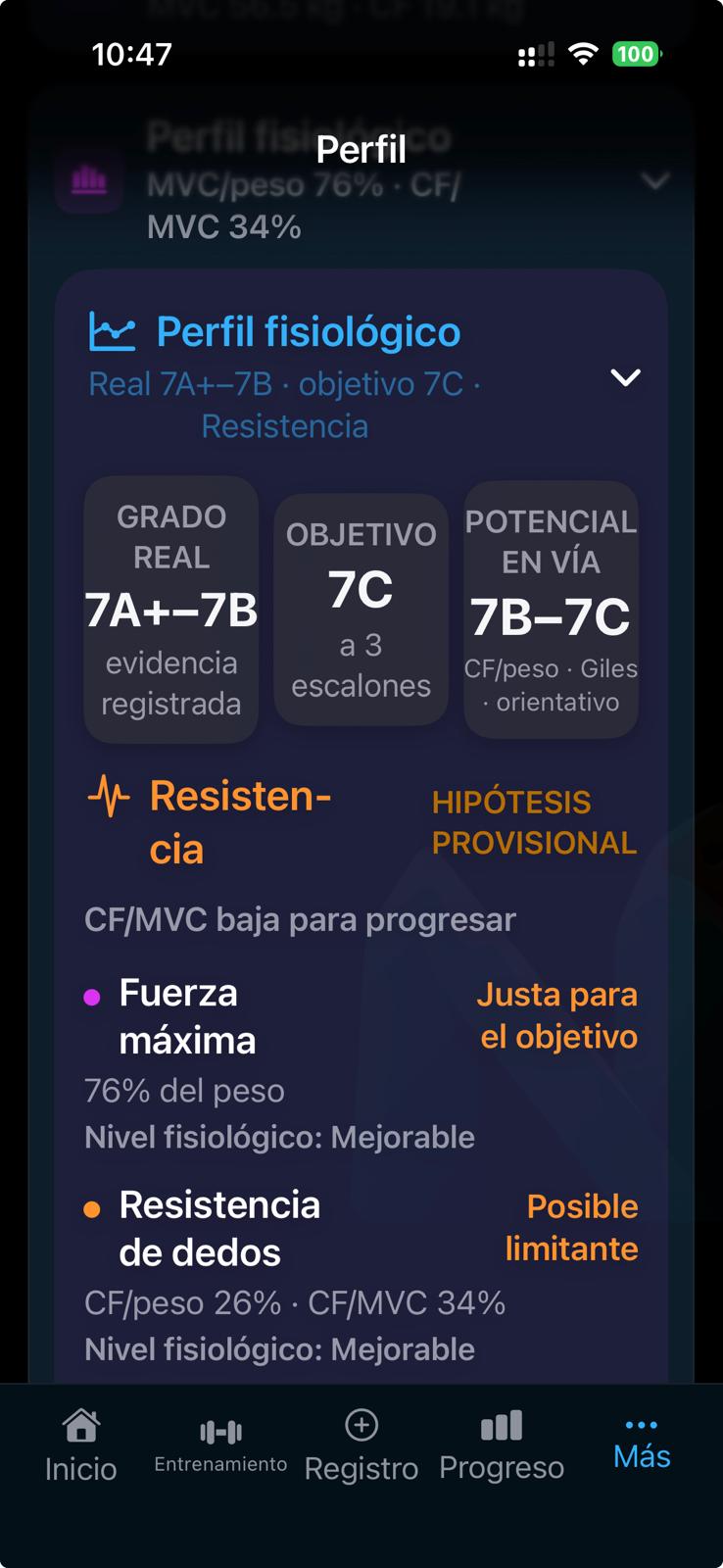
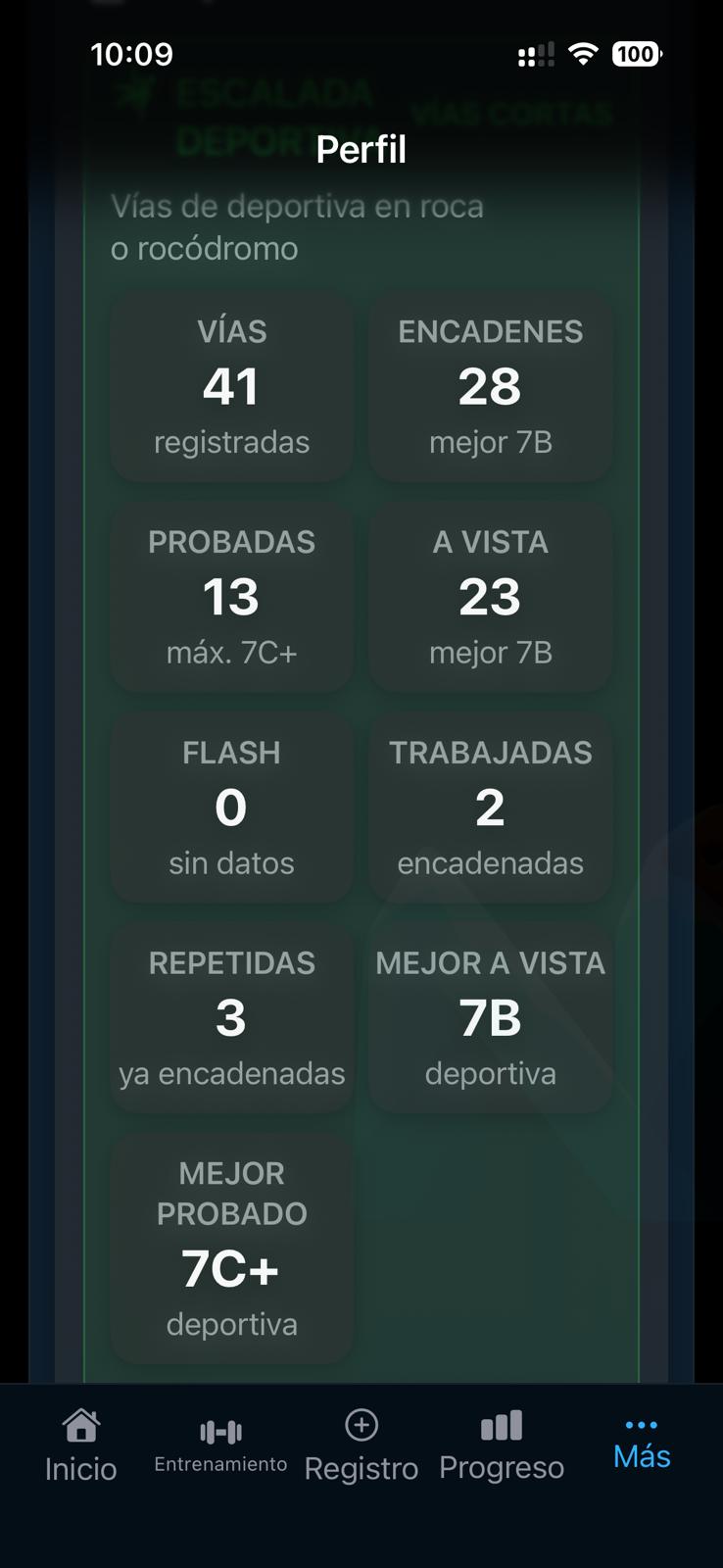
Sends, onsights, attempts and climbing days add context to your real level. If a physical metric improves but your climbing does not, NEXO should question where the limitation lies. If you improve on rock while a test barely changes, that progress counts too.
Two climbers at the same grade may need different stimuli. NEXO aims to identify what limits each person.
A number only has value when we know where it comes from and how it changes relative to your own reference.
More training does not always mean better training. We seek enough stimulus to progress while still being able to recover.
Strength, endurance and power are means. The method should ultimately improve your ability to climb.
Use NEXO independently, follow a programme built around a specific goal, or add human coaching when you want closer supervision.
Planning, guided sessions, logging, analysis and adaptation for independent training.
AutonomyGuided programmes for specific goals. The plan structure adapts to your progression and availability.
Specific goalIndividual planning and periodic trainer review using the history and data recorded in NEXO to guide decisions.
Human supportApply for early access to NEXO CLIMB. Tell us briefly how you climb and how you train.
contacto@nexoclimb.com